Jiu-Jitsu is exploding in popularity because it gives you a clear path: learn fundamentals, test them safely, and improve for years without getting bored.
If you are looking at Jiu-Jitsu in Hazlet NJ and wondering what the journey actually looks like, you are not alone. Brazilian Jiu-Jitsu has grown to an estimated 5 to 6 million practitioners worldwide, with roughly 500,000 to 750,000 in the US, and that growth is not slowing down. Search interest has climbed steadily for two decades, which matches what we see on our mats: more adults starting from scratch, more kids getting into structured programs, and more people training for fitness and focus as much as self-defense.
We also know the big question hiding underneath the excitement: can you really go from beginner to black belt, and how do you stay on track in a real-life schedule? The honest answer is that most people earn a black belt in about 8 to 12 years with consistent training, but the timeline is only part of the story. The bigger win is building a roadmap you can follow week to week, so progress feels measurable instead of random.
In this guide, we will walk you through the stages of Jiu-Jitsu, what your training should focus on at each belt level, and how to make progress in Hazlet without burning out. You will also see how we structure our coaching to keep you improving, whether your goal is confidence, competition, fitness, or all of the above.
Why Jiu-Jitsu Works So Well for Real Progress
Jiu-Jitsu is different from many activities because it gives you immediate feedback. When a technique works, you feel it. When it does not, you feel that too, and you get to troubleshoot it in real time with a partner who is cooperating, resisting, or somewhere in between. That combination of problem-solving and physical effort is a big reason many practitioners report cognitive benefits from training, including better focus and stress management.
Another reason progress is so visible is that the skill ladder is built around positions and outcomes you can track. You start learning how to survive, then how to escape, then how to control, and finally how to submit. That order matters. When we coach beginners, we do not rush submissions first because it feels exciting. We build the base so you can stay calm, breathe, and make good decisions under pressure.
Jiu-Jitsu also fits modern goals. Only about 20 percent of practitioners list self-defense as the primary motivation now, while fitness, community, and mental benefits are huge drivers. We embrace that reality. You can train for practical self-defense, but you can also train because you want a tough, engaging workout that keeps your brain switched on.
Your Belt-by-Belt Roadmap in Hazlet
White Belt: Build Your Base (About 1 to 2 Years)
White belt is where you learn the language of the sport. The goal is not to collect moves. The goal is to understand positions, stay safe, and begin moving with intention. Early on, you will hear the same concepts a lot, and that is a good thing. Repetition is where your confidence comes from.
At this stage, we focus on posture, frames, and alignment. You learn what keeps you safe in closed guard, half guard, side control, mount, and back control. You also learn a few reliable escapes and a small number of submissions that connect naturally to those positions.
A strong white belt routine usually includes drilling, positional sparring, and controlled full rounds. If you train 3 times per week, you are giving yourself enough exposure to improve steadily without feeling like training takes over your entire life.
Blue Belt: Connect the Dots (About 2 to 4 Years Total)
Blue belt is where things start to feel like a game instead of a survival test. You will still get stuck, but now you can identify why you are stuck. You will begin building combinations: escape to guard, guard to sweep, sweep to pass, pass to control, control to submission.
We coach blue belts to narrow the focus. It is tempting to try everything you see online, but progress speeds up when you choose a few systems that match your body type and your schedule. This is also where many students first consider competition, even if it is just to experience the adrenaline and learn what needs work.
If competition is on your radar, we also start talking about pacing, grips, and simple scoring awareness, because good decisions win matches as often as athleticism does.
Purple Belt: Develop Strategy and Style (About 4 to 8 Years Total)
Purple belt is where you start to look like yourself on the mat. You will still study fundamentals, but now you are shaping a style. Some students become pressure passers. Some become guard players who hunt sweeps. Some build a back-control game that feels almost inevitable once grips are established.
This is also where modern technical trends matter more. In 2025, the sport continues to evolve with stronger guard pulling mechanics, smarter entries like duck unders, and new ways to control posture from closed and reverse closed guard positions. At the same time, certain no-gi leg-lock patterns are not as dominant as they were a few years ago, because defense and counter-strategies improved.
We help you stay current without chasing fads. The goal is to understand why techniques work, not just copy the shape of them.
Brown Belt: Refine, Pressure-Test, and Teach (About 6 to 10 Years Total)
At brown belt, your job is refinement. You already have a game. Now you tighten the screws: cleaner transitions, better control, and fewer wasted movements. You also develop the ability to teach, because explaining a concept out loud reveals gaps you did not know you had.
Training at this stage can feel surprisingly demanding. Not because you are learning a thousand new techniques, but because you are holding yourself to a higher standard. Small mistakes matter, and you will notice them more. We keep brown belts honest with targeted positional rounds and specific goals for each training block.
Black Belt: Keep Growing and Give Back (About 8 to 12 Years Total)
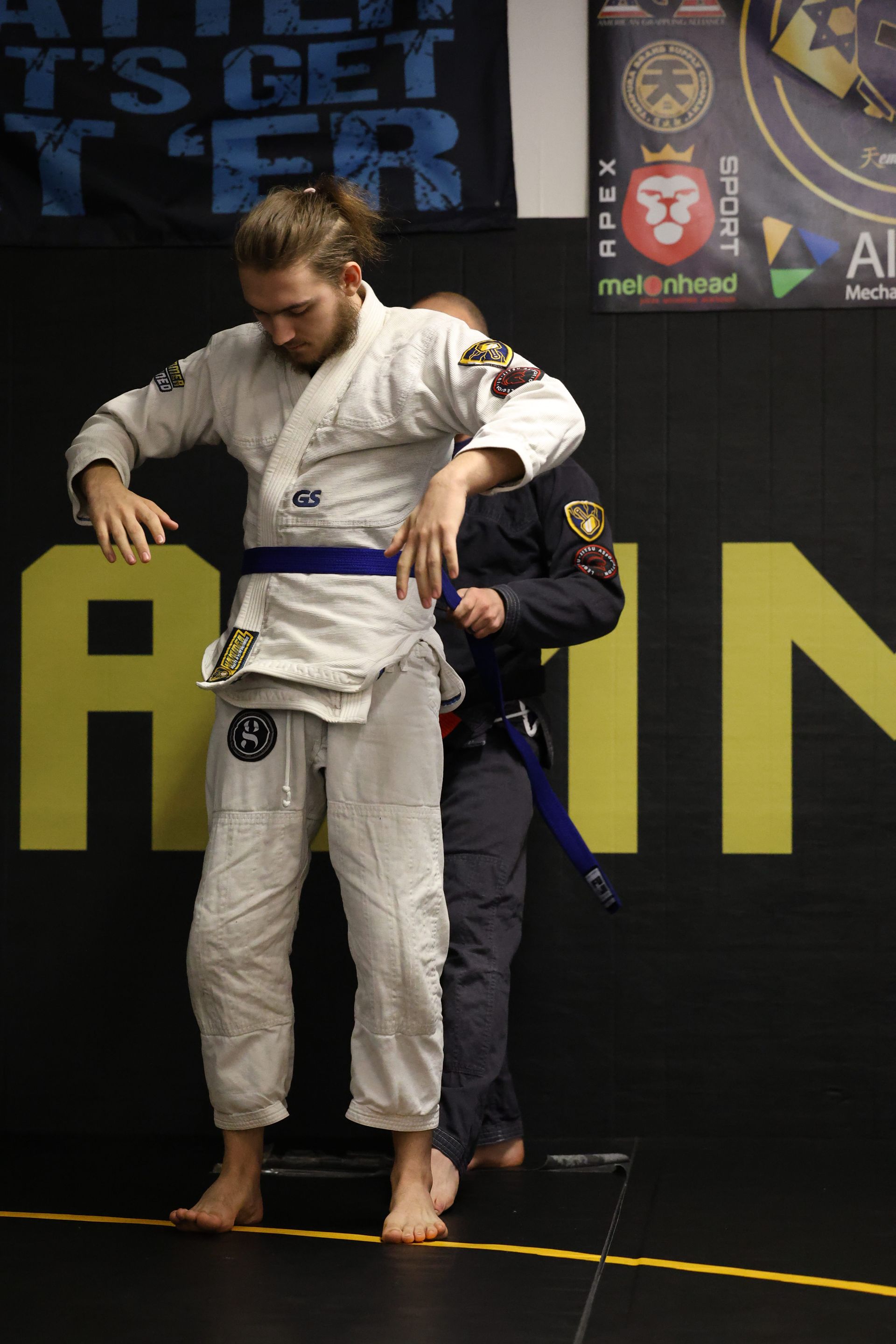
Black belt is not an ending. It is a responsibility and a new beginning. At this level, you keep evolving, you mentor others, and you protect the culture of the room. You also learn how to stay healthy long-term, because the goal is to train for decades, not just for a belt.
When you look at the best competitors and coaches, you will notice the same pattern: basics never leave. The timing and understanding just get deeper.
How We Structure Training So You Actually Improve
A good roadmap is not just belt descriptions. It is what you do each week. Our coaching is built around progressive learning, where each phase supports the next, and where you can train whether you are brand new or already experienced.
Here is what a strong week of bjj training Hazlet NJ typically looks like when you want steady progress:
1. Two to three technical classes focused on a theme, like guard retention or escaping side control
2. One to two rounds-focused sessions where you apply the theme under resistance
3. One mobility or strength session that supports joint health and positional endurance
4. One rest day you actually protect, because recovery is part of progress
We also help you train with intention. Instead of showing up and hoping you improve, you come in with a focus like “win the underhook from half guard” or “escape mount using frames, not strength.” That kind of specificity adds up fast.
What to Expect in Your First Month
Starting Jiu-Jitsu should feel challenging, but not chaotic. In your first month, you should expect a learning curve, a little awkwardness, and plenty of small wins. You will probably sweat more than you think, and you might notice your grip strength and cardio improving quickly.
We keep beginners safe by emphasizing tapping early, learning how to fall and move, and pairing you with training partners who know how to train with control. You do not need to be in peak shape to start. You get in shape by showing up consistently.
To make your start smoother, we recommend:
• Arrive a few minutes early so you can settle in and ask questions without rushing
• Choose one or two techniques per class to remember instead of trying to memorize everything
• Wash your gi and gear promptly, because good hygiene keeps the room healthy
• Track your training days, since consistency matters more than intensity
• Communicate about injuries or limitations so we can coach around them
Gi vs No-Gi in Hazlet: Which One Should You Choose
If you are deciding between gi and no-gi, the best answer is usually both, at least early on. Gi training slows the game down and teaches you control, grips, and patience. No-gi training emphasizes movement, wrestling-style scrambling, and tight positional awareness without fabric grips.
The sport is increasingly segmented, with specialized gear and training approaches, but beginners benefit from seeing the full picture. We guide you toward the format that fits your goals and keeps you training consistently. If your schedule only allows one, we will make that path work.
Staying Motivated Through Plateaus (Because They Will Happen)
Every long-term student hits plateaus. Sometimes it happens after the first few months, when the “new” feeling fades. Sometimes it happens at blue belt, when you realize the mountain is bigger than you thought. Plateaus are not a sign you are failing. They are a sign you are entering the part of training that actually changes you.
We manage plateaus by changing the lens, not the goal. That might mean switching your focus from submissions to escapes for a month, or from winning rounds to improving one position. When you chase small improvements, momentum comes back.
It also helps to remember why Jiu-Jitsu is growing so quickly. The sport is big enough now that you can train for many reasons: fitness, community, competition, stress relief, or personal development. You can let your motivation shift over time and still stay on the path.
Local Momentum: Why Jiu-Jitsu in Hazlet NJ Is a Smart Time to Start
Hazlet sits in a high-density East Coast training corridor, close enough to major event hubs that competition opportunities and seminar culture are part of the landscape. Nationally, academy growth has surged over the last decade, and the broader martial arts industry continues trending upward. Locally, that translates into more structured youth programs, more adults looking for a challenging hobby, and more people who want training that fits a suburban schedule.
We design our class schedule and coaching approach around that reality. You should be able to train before work, after work, or around family responsibilities without feeling like you need to rearrange your whole life. And if you want to test yourself in competition, we can help you build a plan that matches your experience level and keeps you healthy.
Common Questions We Hear From New Students
How long does it take to get good at Jiu-Jitsu
You can feel meaningful improvement in 8 to 12 weeks if you train consistently, but “good” depends on your goals. Most students build real competence by the end of white belt when they can survive, escape, and create offense reliably.
Is it safe for beginners
Yes, when it is coached correctly. We emphasize controlled training, tapping, and smart partner selection so you can train hard without training reckless.
Do I need to be athletic
No. Jiu-Jitsu rewards leverage, timing, and composure. Fitness improves naturally as you train, and we can scale intensity to your starting point.
Can I train for self-defense and sport
Absolutely. We teach fundamentals that translate to both. As you progress, you can lean more toward competition strategy or self-defense scenarios based on what matters to you.
Start Your Journey With Hammer Sports and Performance
Progress in Jiu-Jitsu is not magic, but it is predictable when you follow the right roadmap: fundamentals first, systems next, strategy after that, and refinement over time. When you train consistently, your body changes, your focus sharpens, and stressful situations feel more manageable because you have practiced staying calm under pressure.
We built our Jiu-Jitsu program at Hammer Sports and Performance to help you move through that roadmap with structure, coaching, and a culture that keeps training challenging but welcoming. If you are ready to start in Hazlet, NJ, we will meet you where you are and help you build momentum that lasts.
New to martial arts or fitness training? Start with a free trial class at Hammer Sports and Performance and train at your own pace.
