
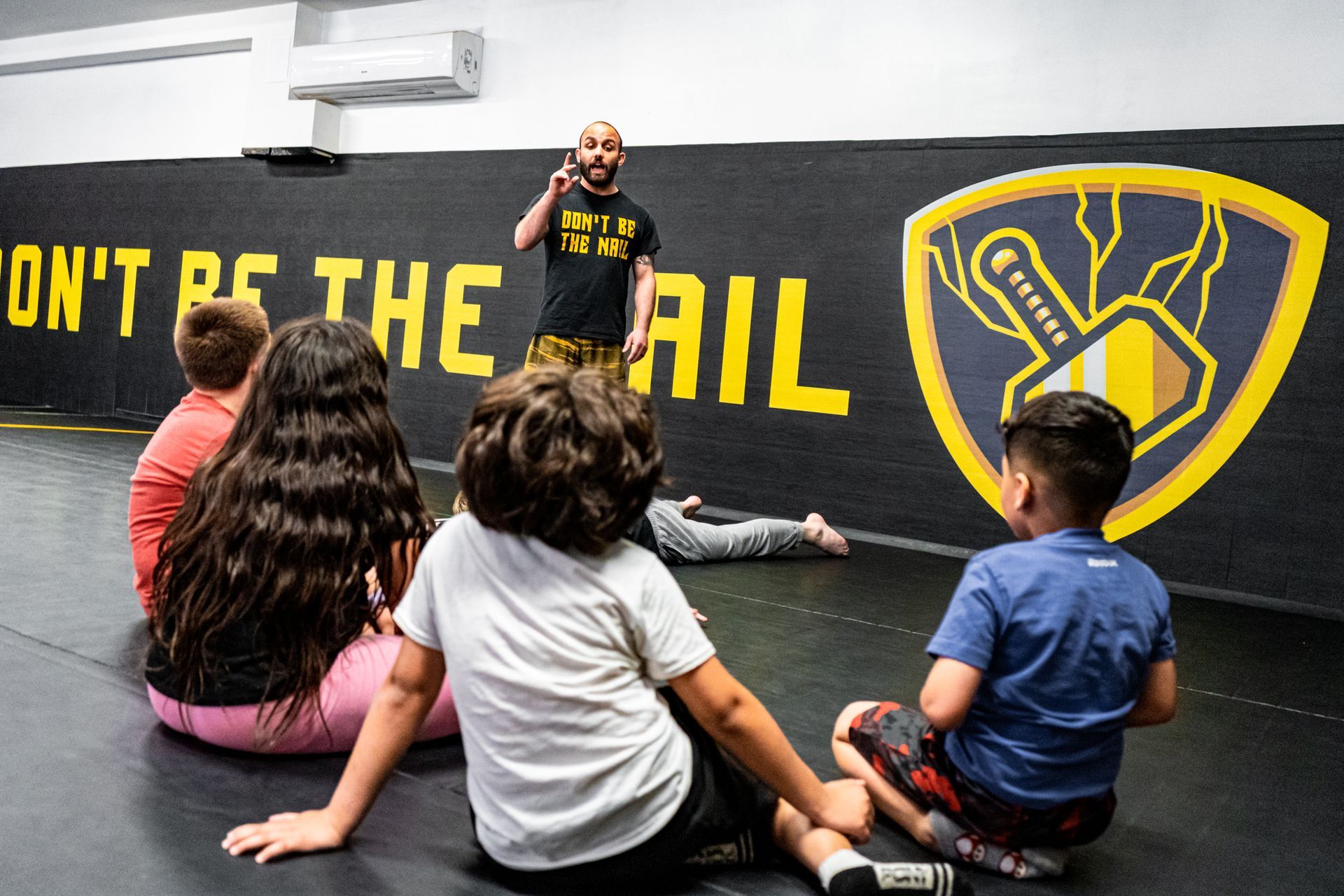
The fastest friendships often form when kids have to cooperate, communicate, and keep each other safe.
Parents in Southampton often ask us a version of the same question: will my child actually make friends here, or will this just be another activity where everyone shows up, does the work, and leaves? It is a fair concern, especially when kids already have full schedules and social circles can feel surprisingly hard to break into.
Youth Jiu Jitsu works a little differently because the training itself is built on partnership. From the first class, your child is learning with someone, not just next to someone. That simple difference is one of the biggest reasons we see real friendships form, and why teamwork becomes a daily habit instead of a once-a-season pep talk.
Just as important, our culture in Southampton treats training partners like teammates. We coach kids to help each other improve, to communicate clearly, and to take shared responsibility for safety. Over time, that creates a community feeling that is hard to fake and easy to notice.
Why Youth Jiu Jitsu Naturally Creates Real Friendships
Friendship in kids is usually built through repeated, meaningful interaction. Youth Jiu Jitsu provides that repetition in a structured way. Your child is not just playing around; our drills require cooperation, feedback, and trust, and those are the same ingredients that make friendships stick outside the gym.
A big part of the process is partner rotation. Kids work with different classmates, different sizes, and different personalities. That teaches social flexibility: how to be respectful with someone new, how to match energy with a quieter partner, and how to speak up if something feels uncomfortable. These are small moments, but they add up fast.
We also find that jiu jitsu gives kids a shared language. When students learn grips, positions, and escapes together, they start talking like teammates. The conversations continue before class, after class, and sometimes all the way to the car ride home, which parents tend to love.
Communication is built into the drills
In Youth Jiu Jitsu, communication is not optional. If your child is drilling a technique, both partners need to agree on pace and pressure so the movement is clean and safe. We actively coach kids to say things like, slow down, can we reset, and try it again. Those phrases sound simple, but they teach kids how to collaborate under a little bit of stress.
Rolling, our controlled form of sparring, builds this even more. Students learn that being a good teammate means giving the right resistance, not trying to overwhelm a partner. That balance creates mutual respect, and respect is usually where the best friendships begin.
Teamwork on the Mat Looks Different Than Team Sports, and That Helps
A lot of families come to us after trying traditional team sports. Those can be great, but they can also be tough for certain kids, especially if playing time is limited or if the social environment is cliquey. Youth Jiu Jitsu still feels like being on a team, but progress is personal and practice is shared, which changes the dynamic.
Instead of competing for a position, students collaborate to sharpen each other. When one child learns a sweep, the whole room benefits because that technique becomes part of the shared learning. When a student struggles, the room slows down and we coach the group to support, not rush.
This is one reason our program works well for kids who are not loud or naturally aggressive. We do not require a big personality to participate. We require consistency, attention, and respect, and those traits translate into strong teamwork.
What teamwork really means in Youth Jiu Jitsu
We define teamwork as a set of behaviors that kids can practice every class. Here are a few that show up on the mat in Southampton week after week:
• Making your partner better by giving the correct level of resistance, not random intensity
• Speaking clearly about safety, including tapping early and stopping immediately when a partner taps
• Celebrating technical improvement, like cleaner movement or smarter decisions, not just winning
• Staying patient when a partner needs extra reps, because everyone has a learning curve
• Taking responsibility for the room by lining up quickly, listening, and setting a respectful tone
Kids pick these habits up faster than many parents expect. And once those habits are normal on the mat, it is common to hear about them showing up at school, in group projects, and even at home with siblings.
The Role of Healthy Conflict and How It Builds Social Confidence
Kids disagree. Kids bump into each other socially. Sometimes they freeze, sometimes they lash out, and sometimes they avoid the situation altogether. We treat Youth Jiu Jitsu as a safe place to practice handling conflict with structure and boundaries.
Sparring teaches emotional control in a very practical way. A student ends up in a difficult position, feels pressure, and has to breathe, think, and respond. That is a life skill, not just a martial arts skill. The student learns to reset instead of panicking, and that same reset can help during a tense moment with friends.
We also coach respectful problem-solving when issues pop up, like a partner going too hard or someone feeling frustrated. Instead of ignoring it, we help kids use simple communication. Say what you need. Ask for a reset. Get an instructor if you are unsure. Those are diplomatic skills, and they carry over.
Inclusivity: Why All Personalities Can Belong Here
Some kids walk in confident and social. Others hang back, watch the room, and need time. We design our Youth Jiu Jitsu classes so both types can thrive. The structure helps quieter kids because they always know what to do next. The partner work helps them connect because interaction is purposeful, not awkward.
Body type matters less than many people assume. Technique rewards timing and leverage, not just strength. That makes it easier for kids to feel capable early on, which is important for friendship-building. When kids feel competent, they engage more. When they engage more, they connect more.
We also keep expectations clear. No one is asked to be perfect. We care about effort, focus, and respect. Kids relax when the standards are consistent, and relaxed kids tend to make friends faster.
How Our Class Structure Encourages Community in Southampton
Community does not happen by accident. We build it on purpose, in small ways that repeat every class. We start with a clear lineup and greeting, we pair students intentionally, and we reinforce good partner habits out loud so kids know what matters.
We also keep progress visible. Kids see classmates earn stripes, improve positions, and get better at staying calm. That shared progress becomes a glue that holds the group together. Your child is not just making friends, your child is watching friends grow, and that is a different kind of bond.
Families notice it too. When kids train consistently, parents tend to see the same faces each week, chat a bit between classes, and support one another at events. It becomes a familiar rhythm in Southampton life, which feels good in a busy season and in the quieter months.
Is it always competitive?
Not necessarily, and it does not need to be. Youth Jiu Jitsu can include competition, but our bigger goal is building capable, confident students who enjoy training and treat partners with care. Some kids love testing themselves in a more formal way. Others want the challenge of class without the pressure of a tournament environment. We guide you toward the right fit.
Either way, the social benefits remain because the daily work is cooperative. Even when students do compete, their teammates are the ones helping them prepare, drilling with them, and calming nerves. That preparation is teamwork in a very real form.
Youth Jiu Jitsu and Mixed Martial Arts in Southampton: How They Fit Together
Families also ask how grappling connects to Mixed Martial Arts in Southampton. In a youth setting, we focus on age-appropriate training that emphasizes safety, control, and foundational skill. Jiu jitsu is one of the most practical bases for understanding distance, balance, and body mechanics, and it teaches kids to think under pressure without relying on wild movement.
For some students, jiu jitsu is the main path and they stick with it for years. For others, it becomes part of broader Martial Arts in Southampton goals like overall athleticism, discipline, and self-confidence. Either way, teamwork is still central because the training requires partners, feedback, and trust.
Our approach is to build a foundation first. When kids understand how to move well and respect training partners, they can explore more advanced goals over time while staying safe and grounded.
A Simple Picture of Progress: What You Might Notice at Home
After a few weeks of Youth Jiu Jitsu, many parents tell us the changes are subtle but real. Kids speak a little more clearly. They handle frustration differently. They start naming goals like, I want to work on escapes, or I want to stay calmer when I am tired.
Friendship changes can be even more noticeable. A child who used to drift at social events starts greeting classmates by name. A student who was hesitant to partner up begins asking a new kid to drill. These are small wins, but they are the building blocks of teamwork.
And there is another benefit that is easy to overlook: kids learn how to be coached. They learn to listen, try, fail, and try again without melting down. That mindset helps in school and in group activities, and it makes kids easier to be around, which honestly helps friendships too.
How to Support Your Child’s Social Success in Training
Your child does not need to be outgoing to do well here. What helps most is consistency and a simple routine around class. Showing up regularly means your child sees the same teammates, shares the same challenges, and has time for relationships to form naturally.
If your child is nervous, we recommend arriving a few minutes early so the room feels familiar. Encourage your child to introduce themselves to one classmate each week. We will handle the structure and pairing, but that small goal helps kids feel ownership of the experience.
Most importantly, let the process take a little time. Friendships built through shared practice tend to be deeper, but they develop through repetition. After a month or two, many kids feel like they belong, not because someone forced it, but because they earned their place through effort and respect.
Take the Next Step
If you are looking for Youth Jiu Jitsu in Southampton that genuinely builds friendship and teamwork, we have built our culture around partner training, clear coaching, and a community where kids learn to support each other. The goal is not just better technique, but better communication, better resilience, and a stronger sense of belonging.
When you are ready, we would love to help your child experience the difference in person at Hamptons Jiu-Jitsu. A single class often makes the teamwork element click, because you can see kids cooperating in real time and enjoying the work.
Continue your martial arts journey beyond this article by joining a class at Hamptons Jiu-Jitsu.
