Adult Jiu-Jitsu is where physical steadiness, mental clarity, and a calmer daily rhythm start to come together.
Most adults are not short on responsibilities, but plenty of us are short on balance. Not just the stand-on-one-leg kind, either. We mean the kind that shows up when you are juggling work, commuting, family schedules, and the low-grade stress that can hang around all week.
Adult Jiu-Jitsu is one of the most practical ways we have found to rebuild that balance from the inside out. You get a full-body workout, but you also get coordination, mobility, and the ability to stay composed while your heart rate climbs. Over time, that carries over into everyday life in a way that a lot of basic gym routines just do not.
If you are looking for Jiu-Jitsu in Hazlet, NJ because you want something useful, sustainable, and honestly a little more interesting than counting reps, you are in the right place. Our Adult Jiu-Jitsu in Hazlet, NJ program is built for real adults with real schedules, not just lifelong athletes.
What “everyday balance” actually means for adults
Balance is not one single skill. It is a combination of physical control, emotional steadiness, and the ability to manage stress without feeling like you are constantly in catch-up mode. Adult Jiu-Jitsu supports all three, and it does it in a way that feels practical, because the training is problem-solving with your whole body.
In class, you practice posture, base, and movement. But you also practice staying calm when something is not going your way. That is a sneaky benefit of grappling: you learn to breathe, think, and keep working when you feel pressure.
A lot of adults come in expecting “self-defense” or “a workout.” Those are absolutely part of it. But the bigger win for many people is how training starts to steady everything else.
Pillar 1: Physical balance you can feel outside the gym
Brazilian Jiu-Jitsu is widely recognized as a full-body fitness activity, and for good reason. You are pushing, pulling, bridging, posting, rotating, and stabilizing through awkward angles. That is not random. That is real-world movement.
Better balance starts with base, posture, and control
In Adult Jiu-Jitsu, your foundation matters. You learn how to keep your hips under you, how to distribute weight, and how to stay stable while moving. Those skills show up everywhere: getting up off the floor, carrying groceries, playing with your kids, or just feeling less stiff when you stand up after sitting all day.
We also train balance in dynamic positions, not just static drills. That is important, because life does not happen in a perfect stance. You are stepping, turning, reacting, and adjusting. The “micro-adjustments” you practice in training build coordination and control that carry over surprisingly fast.
Mobility and flexibility that support everyday movement
Adults do not usually wake up thinking, “I need to improve my hip mobility.” But a lot of the aches and tightness we hear about are tied to limited mobility in the hips, shoulders, and spine.
Jiu-Jitsu asks your body to move through a wide range of positions. With smart coaching and gradual progression, that can improve mobility and flexibility, especially when you train consistently. Research on martial arts training in older adults has also found improvements in strength, mobility, endurance, flexibility, and balance, which fits what we see on the mats week after week.
Endurance that is not boring
Cardio can be tough to stick to when it feels repetitive. Grappling builds endurance differently. You work in rounds, you recover, you problem-solve, and you adapt. Your conditioning improves almost as a side effect of learning the skill.
And because every roll is a little different, your brain stays engaged. That matters for consistency, which is the real driver of results.
Pillar 2: Mental balance under pressure
One of the biggest misconceptions about Adult Jiu-Jitsu is that it is only physical. The truth is you train your nervous system as much as your muscles. You practice staying functional while you are uncomfortable, which is a skill adults can use basically everywhere.
Recent practitioner-focused research highlights psychological benefits that come up again and again: improved confidence, reduced anxiety, better mood, stronger commitment, and a real sense of community. The “confidence” part is not about acting tough. It is more like quiet competence. You start to trust yourself because you have handled hard rounds, learned from mistakes, and kept showing up.
Stress relief that does not require you to sit still
Stress management is personal. Some people love meditation. Some people need movement. For many adults, Adult Jiu-Jitsu is stress relief because it forces your attention into the present moment. It is hard to spiral about your inbox when you are focused on frames, posture, breathing, and timing.
You also get a clean end point. Class ends. You cool down. You leave. That simple “start and finish” rhythm can be grounding, especially if your day feels like it never really stops.
Better decision-making when things get messy
A big part of Jiu-Jitsu is learning to make choices under pressure. If you rush, you burn energy and make mistakes. If you freeze, you get stuck. Over time, you learn to slow down mentally even when your body is working hard.
That skill transfers. Not perfectly, but noticeably. Adults often tell us they feel more patient in traffic, more composed in tense conversations, and less reactive when something unexpected happens.
Pillar 3: Life balance through consistency and community
The best training plan is the one you can keep doing. Adult Jiu-Jitsu is not a quick fix, and that is actually the point. Progress takes time, but it is sustainable when you train with a long-term mindset.
A long runway is a feature, not a flaw
In Brazilian Jiu-Jitsu, rank progression reflects real learning. Blue belt typically takes years, not months. That long timeline encourages consistency instead of shortcuts, and it supports the idea that this is a practice you can build into your lifestyle.
When your goal is everyday balance, you do not need a 30-day transformation. You need something you can still be doing next year, and the year after that, without feeling wrecked or burned out.
Community is part of the health benefit
Adults need community, even if we do not always say it out loud. Training partners learn your name, notice when you improve, and help you work through challenges. That sense of belonging is a real differentiator in martial arts, and studies have reported extremely strong community sentiment in BJJ programs.
In practical terms, it means you are not doing this alone. That matters when motivation dips or life gets hectic. You still show up because people are expecting you, and because you want to keep building the skill.
Why Adult Jiu-Jitsu is especially practical for Hazlet adults
Hazlet life tends to be full. There are long workdays, commuting, family obligations, and the general pace of suburban schedules where everything is 10 minutes away but somehow you are still rushing.
Adult Jiu-Jitsu in Hazlet, NJ fits that reality because it is efficient. In one class, you can work strength, conditioning, mobility, coordination, and stress relief. You also learn a skill that feels useful, which makes it easier to prioritize.
We also keep training adaptable. Some adults want to push hard. Others want a steady pace that supports recovery. Many people switch between those modes depending on the season of life. Our goal is to give you a program you can stick with, not something that only works when your schedule is perfect.
What to expect in your first Adult Jiu-Jitsu class
Beginners usually worry about two things: looking clueless and getting hurt. The first one is normal and temporary. The second one is valid, and we take it seriously.
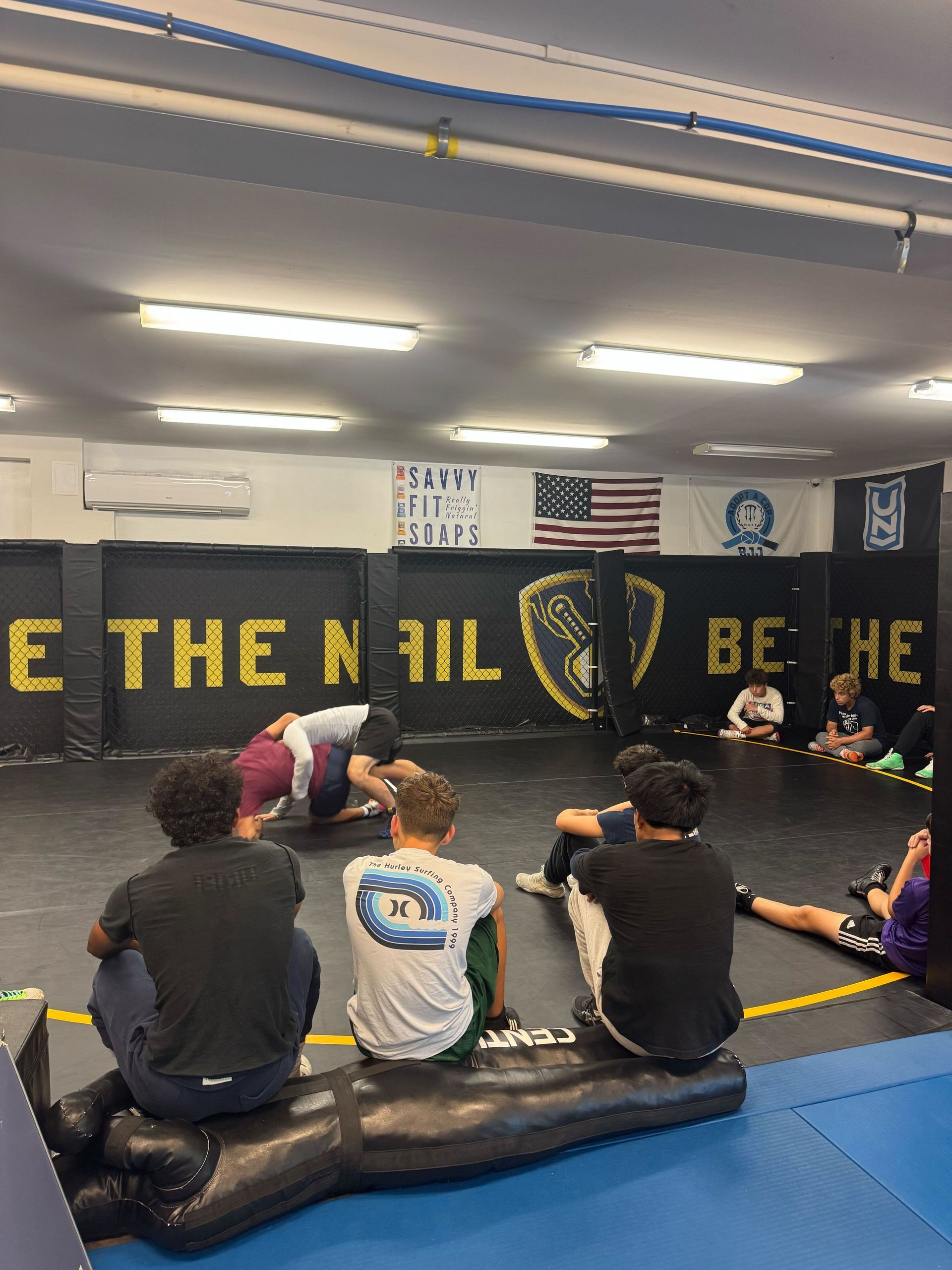
We start you with fundamentals: how to move safely, how to control distance, and how to work with a partner. You will learn positions and escapes before you are expected to “go live” in a way that feels overwhelming.
Here is what a first class often includes:
- A warm-up focused on movement patterns you will actually use
- Technique instruction with step-by-step coaching and reps
- Partner drilling at a controlled pace
- Optional positional training or light sparring based on your comfort level
- A quick wrap-up so you leave understanding what you practiced
You do not need to be in shape to start. Getting in shape is one of the outcomes.
Safety, soreness, and injury prevention for adult training
Injury risk is real in grappling, and pretending otherwise does not help anyone. One cited study notes that 59.2% of BJJ athletes reported at least one injury in the previous six months, which is exactly why smart training habits matter.
We manage risk through coaching, culture, and pacing. You will hear us talk about control, tapping early, and choosing appropriate training intensity. Adults have jobs to go to. We respect that.
Practical ways we help you train safely include:
1. Teaching positions and escapes before pushing intensity, so you are not improvising under stress
2. Pairing you thoughtfully, especially early on, to keep training productive and controlled
3. Encouraging steady consistency over “all-out” weeks followed by layoffs
4. Building body awareness, so you recognize fatigue and protect your joints
5. Supporting recovery habits like sleep, hydration, and mobility work between classes
Soreness is common at first. It is usually the “good” kind of soreness from new movement patterns, and it improves as your body adapts.
How often should adults train to feel a difference?
Consistency beats intensity almost every time. For most beginners, two classes per week is a strong starting point. It is enough frequency to retain what you learn and build momentum, without feeling like you are living at the gym.
If you can do three days a week, progress tends to feel smoother, especially with conditioning and timing. If your schedule is unpredictable, even one day a week can still be valuable, as long as you accept that progress will be slower. The key is staying engaged and returning before “life gets in the way” becomes a long break.
Most adults notice changes in a few areas fairly quickly:
- Within a few weeks: better cardio during everyday tasks and improved mood after class
- Within a couple months: better coordination, fewer “stiff” days, more confidence in basic positions
- Over the long term: meaningful skill, stronger balance and mobility, and a steadier response to stress
Gi vs No-Gi for adult beginners
Adults ask this a lot, and the honest answer is that both are useful. The gi slows things down a bit and gives you grips that can help you feel structure. No-gi is faster and emphasizes body positioning, pressure, and movement without cloth grips.
If you are not sure where to start, we help you pick a lane based on your goals and comfort level. Many adults enjoy training both over time. What matters most is choosing an approach you will actually stick with.
Take the Next Step
Everyday balance is not a motivational slogan. It is a skill set. Adult Jiu-Jitsu gives you physical control, mental steadiness, and a weekly reset that makes the rest of life feel more manageable, even when life stays busy.
That is exactly what we build at Hammer Sports and Performance: training that supports real adults in Hazlet with coaching, structure, and a long-term path you can actually sustain. If you are ready to feel stronger, move better, and handle pressure with more calm, we would love to have you join us.
Turn what you learned into consistent progress with training at Hammer Sports and Performance.
