Youth Jiu-Jitsu gives kids a place to struggle safely, adapt quickly, and realize they can handle hard things.
Youth Jiu-Jitsu works so well for kids because it turns challenges into something concrete and manageable. Instead of vague lectures about confidence, we give your child a clear problem, a safe training partner, and step-by-step coaching. Over time, that process builds something deeper than “being tough” - it builds resilience and self-belief that shows up at school, at home, and in the way your child talks to themselves when something gets difficult.
Here in Hazlet, families want after-school activities that do more than burn energy for an hour. You want a program that supports focus, self-control, and healthy confidence, without putting kids in over their heads. Our Youth Jiu-Jitsu classes are built around that goal: disciplined training, age-appropriate structure, and a welcoming atmosphere that helps beginners feel like they belong quickly.
If you have been searching for Youth Jiu-Jitsu in Hazlet, NJ, you are probably weighing the same questions we hear every week: What age can my child start? Is it safe? Will my child be overwhelmed? The good news is that jiu-jitsu is one of the most adaptable sports for kids, because progress is based on technique and timing, not size or strength.
Why Youth Jiu-Jitsu Builds Real Resilience (Not Just “Confidence”)
Confidence is often treated like a personality trait: some kids have it, some kids don’t. We see it differently. We treat confidence as a skill, built through repetition and small wins. The mats create a simple, honest feedback loop: you try something, it works or it doesn’t, and then you adjust. That cycle teaches kids how to stay calm in the middle of frustration, which is the real foundation of resilience.
In Youth Jiu-Jitsu, kids learn how to keep thinking under pressure. Not panic. Not quit. Not blame a teammate. Just breathe, problem-solve, and keep going. That might sound big for a kids class, but it shows up in small moments: getting stuck under a partner and remembering the escape, making a mistake and asking a question, or losing a round and coming back for the next one anyway.
We also like that jiu-jitsu rewards patience. Many sports praise speed and explosiveness. Jiu-jitsu praises timing, balance, and smart choices. Kids who are naturally energetic learn to slow down and listen. Kids who are shy learn to take initiative. Both types grow, because the game meets your child where your child actually is.
What We Mean by Self-Belief (And How Kids Actually Develop It)
Self-belief is not hype. It is the quiet feeling of “I can figure this out.” For kids, that feeling is powerful because it changes how your child approaches new situations. A child with self-belief is more likely to raise their hand in class, try out for something unfamiliar, or speak up when something feels wrong. That is a big deal.
We build self-belief through structure. Kids see a skill, practice it in drills, and then apply it in controlled training. When your child realizes a technique works against real resistance (with coaching and safety in place), it clicks differently than it does in a mirror or on a screen.
We also teach kids how to reset after mistakes. On the mat, mistakes are normal. Your child is going to get swept, pinned, or tapped out sometimes. We treat those moments as information, not as failure. Over time, kids stop spiraling when something goes wrong. Instead, they learn to ask, “What can I do differently next time?”
Why Hazlet Parents Choose Youth Jiu-Jitsu
Hazlet is full of busy schedules: school, homework, sports seasons, and family time that always feels a little too short. Parents want an activity that is engaging enough to keep kids interested, but structured enough to support better behavior and emotional regulation. Youth Jiu-Jitsu fits that sweet spot.
Because the training is hands-on and interactive, kids stay involved. Because the rules are clear, kids learn boundaries. Because the environment is coached and supervised, kids get a safe place to test themselves physically and emotionally. And because jiu-jitsu relies on leverage and technique, it tends to feel accessible for kids of different builds and athletic backgrounds, including kids who have not found “their sport” yet.
If you have been looking specifically for Jiu-Jitsu in Hazlet, NJ, it helps to know what a strong kids program should include: age-appropriate classes, a clear beginner pathway, and coaches who can keep energy high while still maintaining control and safety. Our classes are designed around those practical realities, not guesswork.
What a First Youth Jiu-Jitsu Class Looks Like
Most kids walk in with a mix of curiosity and nerves. That is normal. We keep the first class friendly and structured, so your child understands what to do and where to stand, and you understand how the room is run. We do not throw new kids into chaotic situations or expect them to “figure it out.”
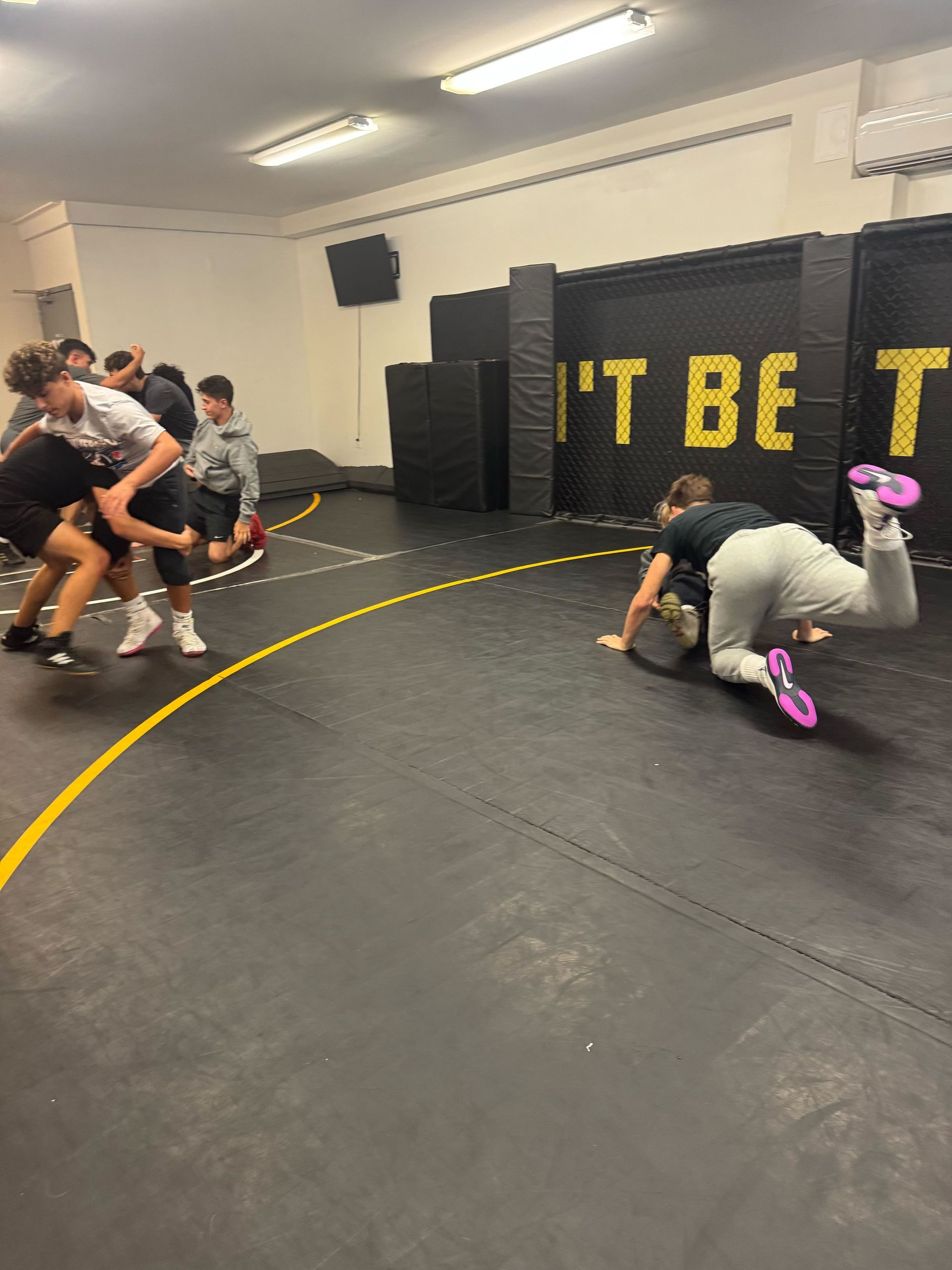
A typical class includes a warm-up that feels like movement games, basic breakfalls and body control, technique practice with a partner, and age-appropriate drills. Depending on age and experience, we may include controlled live training, but always with clear rules and close coaching. Safety and skill-building come first.
You will also notice that the coaching is specific. Instead of “try harder,” kids hear simple instructions: where to place a hand, how to shift hips, when to breathe, how to keep their base. That detail matters. It helps kids feel capable quickly.
Age Groups and How We Place Kids
Parents often ask if kids are grouped by age, size, or experience. The answer is yes, and we take it seriously. In the Hazlet area, kids programs commonly begin around ages 4 to 5, and our Youth Jiu-Jitsu approach follows that general readiness window. From there, we keep classes age-appropriate and skill-appropriate, so kids train with peers who match their developmental stage.
In many kids programs (including ours), you will see age bands like:
- Ages 4 to 7 for foundational movement, listening skills, and simple grappling concepts
- Ages 8 to 12 for stronger technical focus, positional awareness, and structured drilling
- Ages 13 and up for more advanced detail, conditioning, and higher-intensity problem-solving
If your child is between groups, we help you choose the best fit based on maturity, attention span, and comfort level, not just a number on a calendar.
Safety: What Parents Should Know Before Signing Up
Is jiu-jitsu safe for kids? It is a fair question, especially if your child is new to sports. Youth Jiu-Jitsu is a contact sport, but it is also one of the most controllable, because we can scale intensity and choose training games that match age and experience.
We keep kids safe by prioritizing supervision, controlled partner work, and clear rules around how to move and how to stop. We also teach tapping early. Tapping is a skill: it teaches kids to communicate, set boundaries, and protect themselves. That is a life lesson hiding inside a simple action.
Safety is also about culture. When the room is respectful, kids learn to take care of training partners. That reduces reckless behavior and builds trust fast.
Gi vs No-Gi: What Beginners Should Start With
You might see both gi and no-gi options in the local scene, and parents often wonder what is best. The gi is the traditional uniform that gives kids grips to hold, which can slow the action down and make certain positions easier to understand. No-gi is usually practiced in athletic gear without the jacket, and it tends to feel faster and more movement-based.
For beginners, both can work. What matters most is that your child trains consistently in a structured class where fundamentals are taught clearly. If you are unsure what to bring to the first class, start simple. We can guide you on what to wear and what gear is needed once you check the website and look over the program details.
What Progress Looks Like in Youth Jiu-Jitsu (Beyond Belts)
Parents like milestones, and kids like earning them too. Progress in Youth Jiu-Jitsu often includes ranks and stripes, but we also encourage you to watch for the quieter wins. Those are usually the ones that change your child’s day-to-day life.
Here are a few signs your child is progressing, even if it is not obvious at first:
- Your child listens faster and needs fewer reminders to stay on task
- Your child stays calmer when losing and recovers quicker after frustration
- Your child becomes more comfortable with healthy, respectful physical contact
- Your child starts using words like “I’ll try again” instead of “I can’t”
- Your child takes pride in practice, not just in winning
Those changes come from repetition and coaching, not motivation speeches. That is why showing up matters.
How Often Should Kids Train to Feel the Benefits?
Consistency beats intensity, especially for kids. For many families, two classes per week is a realistic starting point and enough to see meaningful improvements in coordination, confidence, and emotional control. Some kids love it and want more, and that can be great too, as long as school, rest, and family balance stay healthy.
If your child is brand new, it is normal for the first couple of weeks to feel like a lot. New routines, new language, new partners. We aim to keep the experience positive and structured so your child can settle in and build momentum without feeling pressured.
If you are exploring Youth Jiu-Jitsu in Hazlet, NJ as a long-term activity, think in seasons, not single classes. Most of the real growth happens after the novelty fades and your child learns how to keep going anyway.
Youth Jiu-Jitsu and Everyday Self-Defense for Kids
While many parents start with the self-defense question, we like to frame it clearly: self-defense is more than techniques. It includes posture, awareness, boundaries, and the confidence to speak up early. Jiu-jitsu supports those habits because it teaches kids how to stay composed in close-range situations, how to escape pins, and how to problem-solve when someone is stronger.
Just as important, kids learn discipline. That discipline shows up in how your child follows directions, respects space, and manages impulses. For many families, those are the benefits that feel most immediate at home.
Ready to Begin
If you want your child to build real resilience, not just temporary motivation, jiu-jitsu is a practical place to start. Our Youth Jiu-Jitsu program is designed to be welcoming for beginners, structured for steady progress, and engaging enough that kids actually want to come back.
When you are ready, Hammer Sports and Performance makes it easy to explore next steps through the website, the program details, and the class schedule so you can choose a starting point that fits your family’s routine.
Build a stronger foundation for athletic performance through training at Hammer Sports and Performance.
