Youth Jiu-Jitsu gives kids a place to work hard, track progress, and feel proud of who they’re becoming.
Youth Jiu-Jitsu is one of the most practical ways we’ve found to help kids build confidence without turning everything into a pressure cooker. In a good class, your child moves, sweats, laughs a little, learns something real, and leaves with a clear win to carry into the rest of the week.
In Hazlet, families are already busy with sports seasons, school routines, and practices that fill up the calendar fast. What makes Youth Jiu-Jitsu fit so well is that it doesn’t compete with those values, it supports them. We use structure, repetition, and measurable milestones to teach kids how to set goals, stick to the plan, and handle setbacks without melting down.
And yes, kids learn self-defense. But the bigger point is the whole-child growth that comes with it: focus, emotional control, coordination, and the ability to keep trying even when something feels hard at first.
Why Youth Jiu-Jitsu Works So Well for Goal-Setting
A lot of youth activities talk about goals, but martial arts makes goal-setting unavoidable in a good way. In Youth Jiu-Jitsu, your child sees what progress looks like. One week a movement feels confusing, and a few weeks later it’s automatic. That change is powerful for kids, especially kids who are still figuring out how effort connects to results.
We teach in layers. Kids learn a few key movements, then learn when to use them, then learn how to stay calm while using them with a partner. Those layers become natural milestones, and milestones make goals feel real instead of abstract.
Goal-setting in our program usually shows up as:
- Learning a skill and repeating it enough to do it safely and smoothly
- Following the class routine with fewer reminders over time
- Staying composed when a drill gets challenging
- Practicing good decision-making with partners, like control and respect
- Earning small recognitions that mark consistent effort, not just talent
That last part matters. Kids notice when improvement is rewarded, not just “being the best.” It helps quieter kids, smaller kids, and kids who don’t love being the center of attention.
Why Hazlet Families Gravitate Toward Structured Youth Training
Hazlet has a strong youth sports culture, and you can feel it in the community. Many families are already used to organized practices, coaches, and team schedules. Youth Jiu-Jitsu fits into that world, but with a different kind of benefit: your child gets individual progress inside a group environment.
Team sports can be great, but not every child thrives when the main feedback is a scoreboard. In Youth Jiu-Jitsu, progress isn’t limited by who’s on the roster or what position your child plays. Your child develops skills at a personal pace, and that pace still counts.
This is also a year-round activity that supports healthy routine-building. When school gets intense or the weather changes, having a consistent training schedule can help kids stay grounded. We’ve watched kids show up a little restless after a long day and leave more settled, like someone turned the volume down.
What Kids Learn in Youth Jiu-Jitsu Beyond the Techniques
It’s easy to assume Brazilian Jiu-Jitsu for kids is mostly about grappling. The truth is the techniques are the vehicle, and the lessons are the destination.
Confidence built on competence
Confidence grows fastest when it’s earned. When kids learn how to escape a tough position or control their movement, the confidence that follows is different than “pep talk” confidence. It’s quiet and solid.
Focus and listening under pressure
In class, kids learn to listen while moving. They learn to follow steps, adjust when coached, and keep their attention on what matters. Those skills tend to carry into school and home routines, especially when you stick with it for a few months.
Coordination, balance, and body awareness
Youth Jiu-Jitsu improves how kids move. That shows up in sports performance, but it also shows up in everyday stuff: fewer clumsy collisions, better posture, and more control over their own bodies.
Resilience and problem-solving
BJJ is often called “human chess,” and kids feel that. When something doesn’t work, we help kids try a different angle rather than quitting. Over time, that habit becomes normal.
Anti-bullying readiness without aggression
We take bullying concerns seriously, and we approach it in a practical way. Kids learn boundaries, posture, awareness, and the confidence to speak up. When physical contact happens, we teach controlled responses and the idea of getting safe, not getting even.
Is Youth Jiu-Jitsu Safe for Kids?
Safety is usually the first question parents ask, and it should be. Youth Jiu-Jitsu is a contact sport, but it’s also one of the most controlled environments for learning contact because everything is coached.
We structure classes to reduce risk:
- Age-appropriate groupings and supervised partner work
- Technique-first instruction before adding resistance
- Clear rules for control, tapping, and stopping immediately
- Drills that build skills gradually rather than throwing kids into chaos
- A culture of respect, including how kids speak to partners and follow directions
There’s also an important point that gets missed: learning how to fall, move, and stay calm during contact can make kids safer in general. When kids understand balance and control, they tend to get hurt less in the long run.
Youth Jiu-Jitsu Is Great for Smaller or Less Aggressive Kids
One of the reasons BJJ works across different body types is that it’s based on leverage, positioning, and timing. Kids don’t need to be big, loud, or naturally tough to do well. In fact, some of the most consistent progress often comes from kids who are patient and detail-oriented.
If your child is hesitant, we don’t force a personality change. We coach confidence through small wins, like learning a basic movement, completing a drill cleanly, or staying engaged for the whole class without shutting down. Those wins add up.
Youth Jiu-Jitsu also gives energetic kids a productive outlet. The structure matters. Kids can work hard, but inside boundaries. That combination tends to translate to better self-control outside the gym too.
How Youth Jiu-Jitsu Compares to Wrestling and Other Sports
Parents often ask how this compares to wrestling, or whether it “counts” as an athletic base. It does. Youth Jiu-Jitsu builds strength, mobility, grip endurance, and conditioning, but it also develops decision-making under pressure.
Wrestling emphasizes takedowns and top control with a fast pace. Jiu-Jitsu includes stand-up elements too, but it adds a broader ground game with positions, escapes, and submissions taught in a controlled, age-appropriate way. For many kids, that technical depth keeps things interesting, because there’s always a new puzzle to solve.
And compared with traditional team sports, Youth Jiu-Jitsu offers more direct feedback. If a technique works, your child knows. If it doesn’t, we troubleshoot it right away. That kind of immediate learning loop is a big reason kids stay motivated.
A Simple Beginner Roadmap: First Class to First Milestone
Starting something new can feel like a lot, especially for kids. We keep onboarding straightforward, and we focus on helping your child feel comfortable quickly. Here’s what the early path typically looks like.
1. First class: learn the rules, the basic movements, and how partner drills work safely
2. First month: build routine, improve coordination, start recognizing positions and simple escapes
3. First milestone: demonstrate consistent effort, better focus, and cleaner technique during drills
4. Ongoing progress: add new techniques in layers while sharpening the fundamentals you already know
5. Motivation phase: set small goals like “finish every round” or “use the same escape twice” and celebrate the follow-through
This is one of the reasons BJJ Training Hazlet, NJ families appreciate the process. It’s not random. Kids can see the path in front of them, and we can talk about progress in specific terms, not vague “doing great” comments.
What Should Your Child Wear to the First Class?
For a first class, comfort matters. We’ll guide you based on what class your child is joining, but in general, athletic clothing that allows movement is a good start. Avoid anything with zippers or hard buttons, since partner drills involve close contact and we want everything to stay safe.
If your child is nervous, it can help to arrive a little early, get oriented, and meet the instructor. That small step lowers anxiety a lot. Kids relax faster when the space feels familiar.
How Often Should Kids Train to See Progress?
Consistency beats intensity. Most kids do best when they train regularly enough that skills don’t fade between sessions. In practical terms, that usually means a couple of classes per week if your schedule allows.
The real goal is sustainability. If your child trains so much that it becomes a battle to get out the door, it backfires. If your child trains enough to build rhythm, progress becomes almost automatic. You’ll see changes like improved listening, better posture, and more confidence handling small challenges.
If you’re specifically looking for Youth Jiu-Jitsu in Hazlet, NJ that supports long-term development, frequency matters, but so does the quality of coaching and the structure of each class.
What Parents Should Expect in the First Month
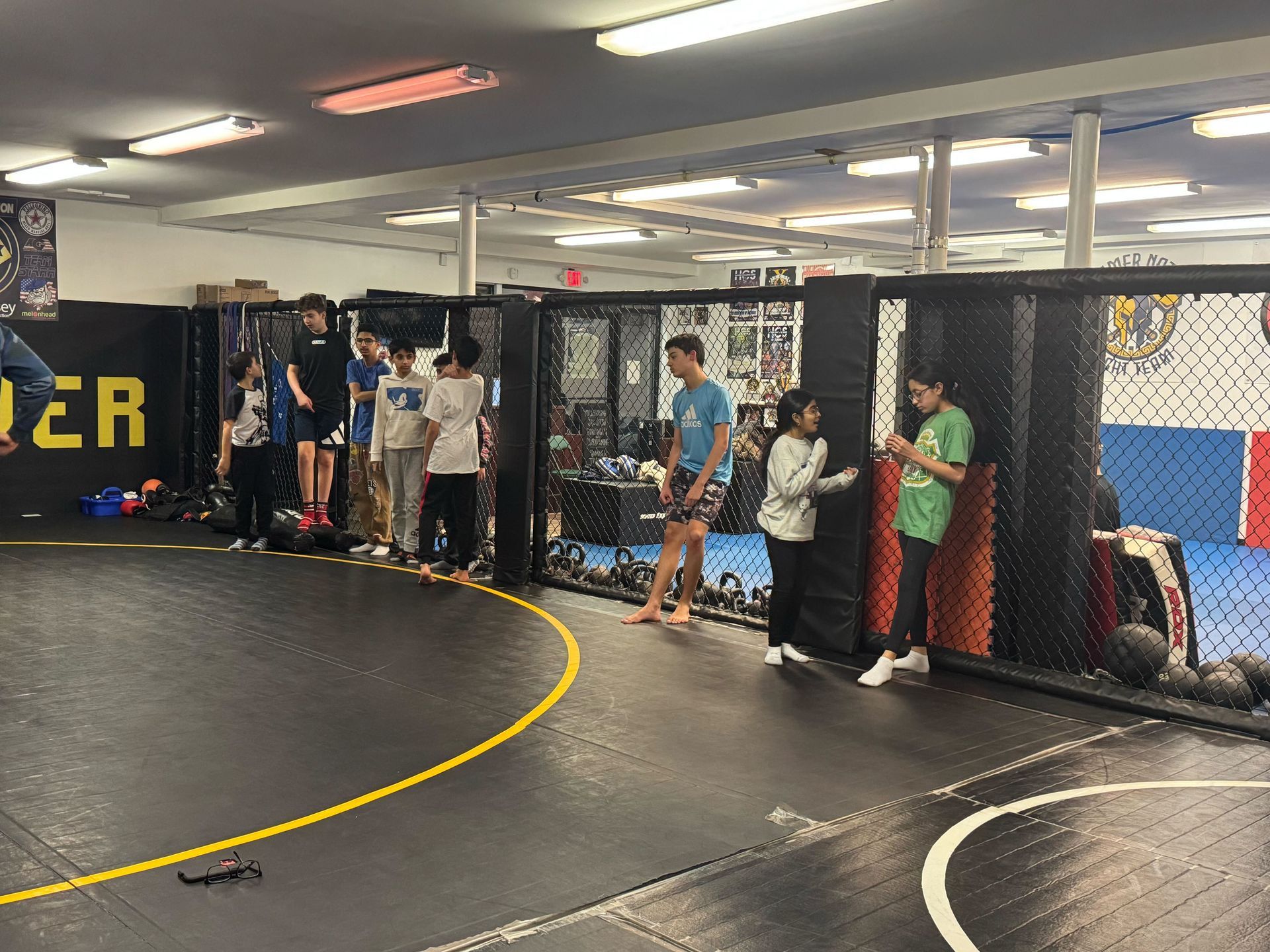
The first month is when kids learn the “language” of class. You’ll probably notice a few predictable stages. Week one is often excitement mixed with uncertainty. Week two brings more comfort and a little testing of boundaries. Week three is where routines start to stick. By week four, many kids can walk in, line up, and start warming up without feeling lost.
At home, parents often tell us they see:
- More willingness to try hard things without instant frustration
- Better body control and balance
- A calmer response to corrections, even outside training
- More pride in effort, not just outcomes
And if your child has an off day, that’s normal. We coach through it. Training is a long game, and part of the benefit is learning how to show up even when everything isn’t perfect.
Take the Next Step
The best part of Youth Jiu-Jitsu is that it teaches kids how to pursue goals with patience and confidence, and those lessons don’t stay on the mats. If you want a program in Hazlet that combines fitness, self-discipline, and practical self-defense in a kid-friendly format, we’re ready to help you get started.
At Hammer Sports and Performance, we keep the experience structured, welcoming, and focused on real progress you can see over time. When you’re ready, we’ll help your child take the first step, then the next one, and then surprise you with how far consistent effort can go.
Make purposeful training part of your routine with Hammer Sports and Performance.
